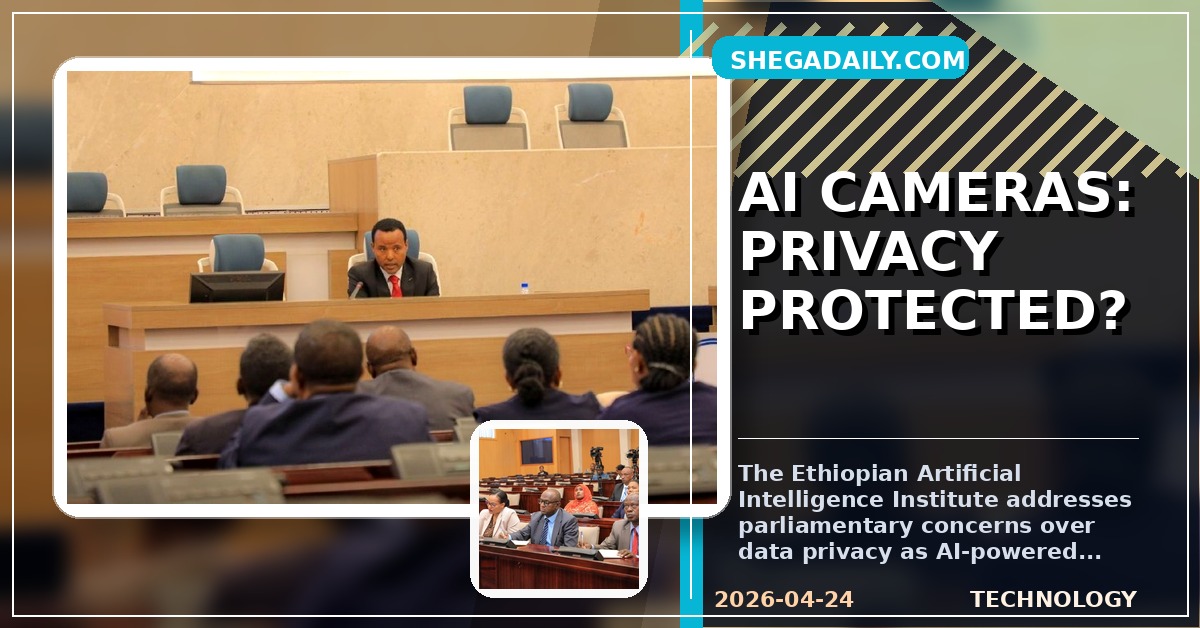
The Ethiopian Artificial Intelligence Institute (EAII) has addressed concerns regarding the privacy and security of data collected by newly deployed AI-powered surveillance systems. During a presentation of its nine-month performance report to the House of Peoples' Representatives Standing Committee on Law and Justice, the Institute detailed its progress in installing advanced security cameras across various cities and government institutions.
The surveillance technology, which features facial recognition and automatic license plate identification, is designed to enhance urban security and institutional safety. However, members of the Standing Committee raised critical questions regarding the ethical and technical safeguards in place. Specifically, lawmakers sought clarification on how the Institute ensures that sensitive personal data, such as facial features, is protected from cyber-attacks and prevented from being used for unauthorized purposes.
In response to these concerns, Dr. Worku Gachena, Director General of the Ethiopian Artificial Intelligence Institute, emphasized that the nationwide deployment is governed by strict technological and legal frameworks. He stated that the data collection process is conducted in a manner that respects individual privacy and is supported by robust cybersecurity measures.
Dr. Worku further explained that the operation of these modern cameras is rooted in Ethiopia’s recently approved Artificial Intelligence Policy and the Personal Data Protection Law. He assured the committee that the information gathered is used exclusively for its intended security purposes. Access to the data is strictly limited to the Federal Police and other legally authorized entities, ensuring that personal information does not fall into the hands of unauthorized individuals or be subjected to misuse.
This move comes as Ethiopia continues to invest heavily in digital infrastructure and artificial intelligence to modernize its security apparatus. The EAII, established to lead the country's AI research and implementation, remains at the forefront of balancing technological advancement with the legal rights of citizens.


Source: Telegram / tikvahethiopia