ADDIS ABABA – The Ethiopian Ministry of Education faced intense scrutiny from the House of Peoples' Representatives' Standing Committee on Human Resource Development, Employment, and Technology Affairs on April 15, 2026. The questioning arose from a nine-month report for the 2018 Ethiopian Calendar (E.C.) fiscal year, which revealed a stark imbalance in the implementation of the 'Education for Generations Movement Program' across the country.
The Ministry announced that a staggering 83 percent of the work to improve school standards and mobilize significant resources under this national program was carried out in the Oromia Region. In stark contrast, the remaining regions collectively accounted for only 17 percent of the total effort.
Upon reviewing the report, the Standing Committee expressed deep concern over what it described as the 'very low' performance in regions outside Oromia. Committee members emphasized that the matter 'needs to be investigated' and questioned why a program designated as a national movement exhibited such significant disparities in execution.
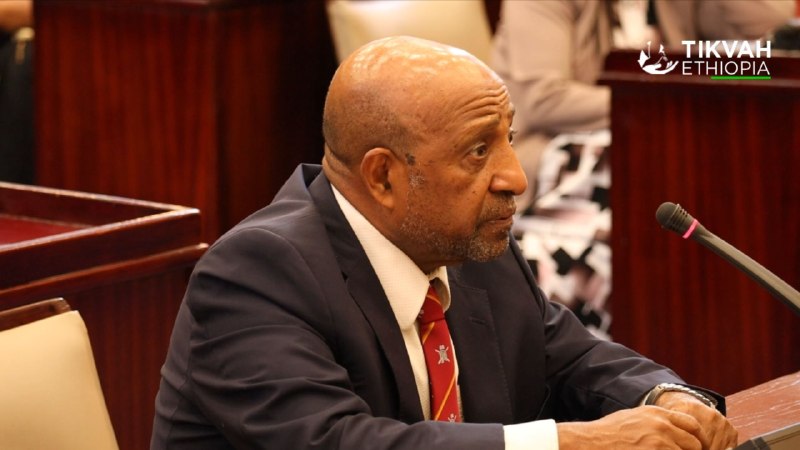
Professor Birhanu Nega, the Minister of Education, responded to the committee's queries by clarifying the jurisdictional boundaries. "Regarding schools, the regions have the authority," he stated. "The budget has been sent; we do not have the right to ask, 'What have you done regarding implementation?'"
The Minister further highlighted the varying levels of regional contribution to the movement, suggesting that Oromia Region's 83 percent performance was indicative of "the initiative in that area." He reiterated the Ministry's core focus, explaining, "Our focus is on students, not regions. We believe that every Ethiopian student should receive equal and equivalent education as any other Ethiopian."
Professor Birhanu also elaborated on a shift in the Ministry's approach to school construction. "Previously, if the Ministry of Education said 'we will build,' it would be distributed among regions; we have now said that will not happen," he explained. "What should happen is that there might be many problems within one region." He added that the Ministry is now assessing needs at the Woreda (district) level to ensure equitable access to education, asking, "Where do schools need to be built for all Ethiopians to receive equal education? We are looking at each one at the Woreda level."
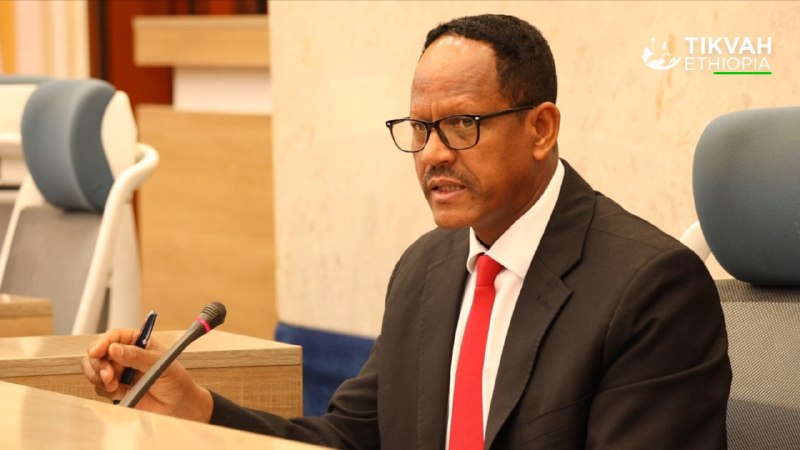
However, Negeri Lencho, the Chairperson of the Standing Committee, pushed back on the Ministry's explanation. He underscored that a mere 17 percent performance in improving education standards in populous regions like Amhara and others, following Oromia, was unacceptable. Lencho urged the Ministry of Education to thoroughly reconsider the issue and to scrutinize reports submitted by regions rather than passively accepting them.
In its final recommendation, the Standing Committee issued a strong directive to the Ministry of Education. It called for "necessary follow-up and supervision" to ensure that "the construction of various model and special boarding schools in the regions is completed within the planned budget, time, and quality, and becomes operational." The committee's stance signals a demand for greater accountability and more balanced implementation of national development programs across all Ethiopian regions.
Source: Telegram / tikvahethiopia