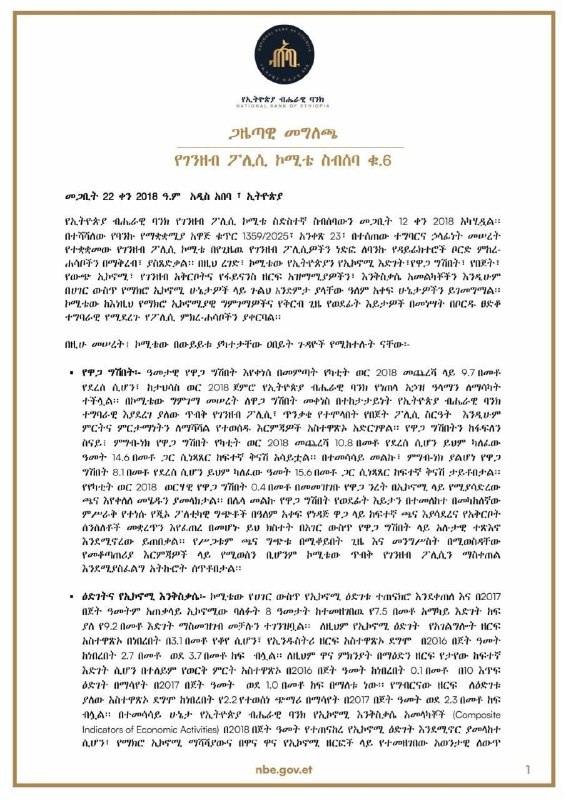
The National Bank of Ethiopia (NBE) has announced a significant transition in its monetary policy framework, confirming that minimum interest rates will now be determined by market forces. This move marks a continuation of the central bank's efforts to modernize its monetary policy, which has been transitioning toward an interest-rate-based framework since July 2024.
According to the NBE’s Monetary Policy Committee, the primary objective of this shift is to enhance the effectiveness of the bank's indirect monetary policy tools. By allowing interest rates to be dictated by the market, the central bank aims to exert more precise influence over the money supply circulating within the economy. This approach is intended to better manage inflationary pressures and stabilize the broader financial landscape.
Since the implementation of the new monetary policy framework last year, the NBE has been gradually moving away from direct administrative controls toward a more market-oriented system. The committee emphasized that this latest decision is a critical step in ensuring that the banking sector remains responsive to macroeconomic conditions.
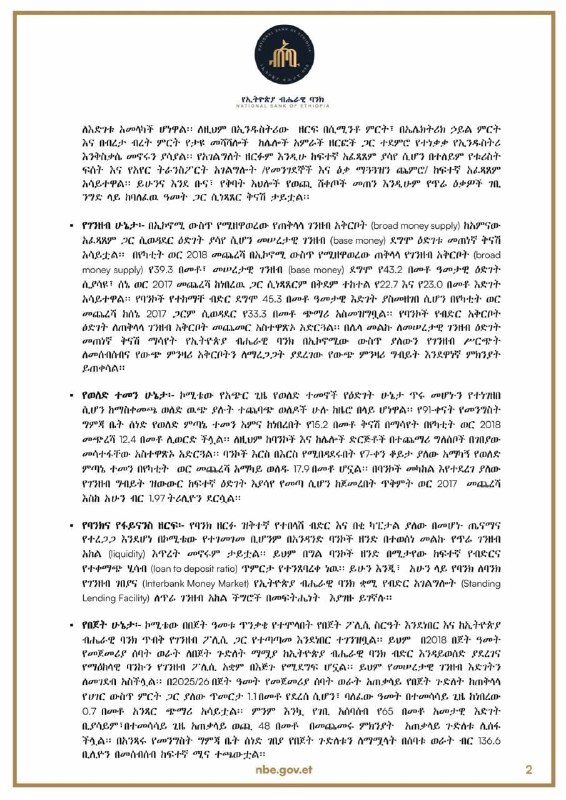
Financial analysts suggest that this policy shift is designed to improve the efficiency of capital allocation across the Ethiopian economy. By allowing banks to set interest rates based on liquidity and demand, the NBE expects to foster a more competitive banking environment. This transition is part of a broader series of economic reforms aimed at liberalizing the financial sector and integrating it more closely with international standards.
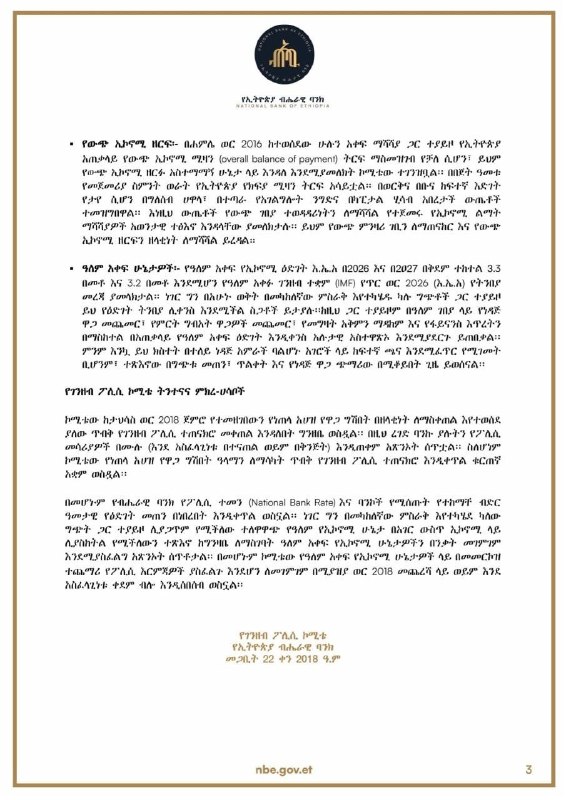
The National Bank of Ethiopia continues to monitor the impact of these changes, noting that the transition will be managed to ensure stability while encouraging sustainable economic growth. Further updates on the implementation of these market-based rates are expected as the central bank continues its oversight of the financial system.
Source: Telegram / tikvahethiopia