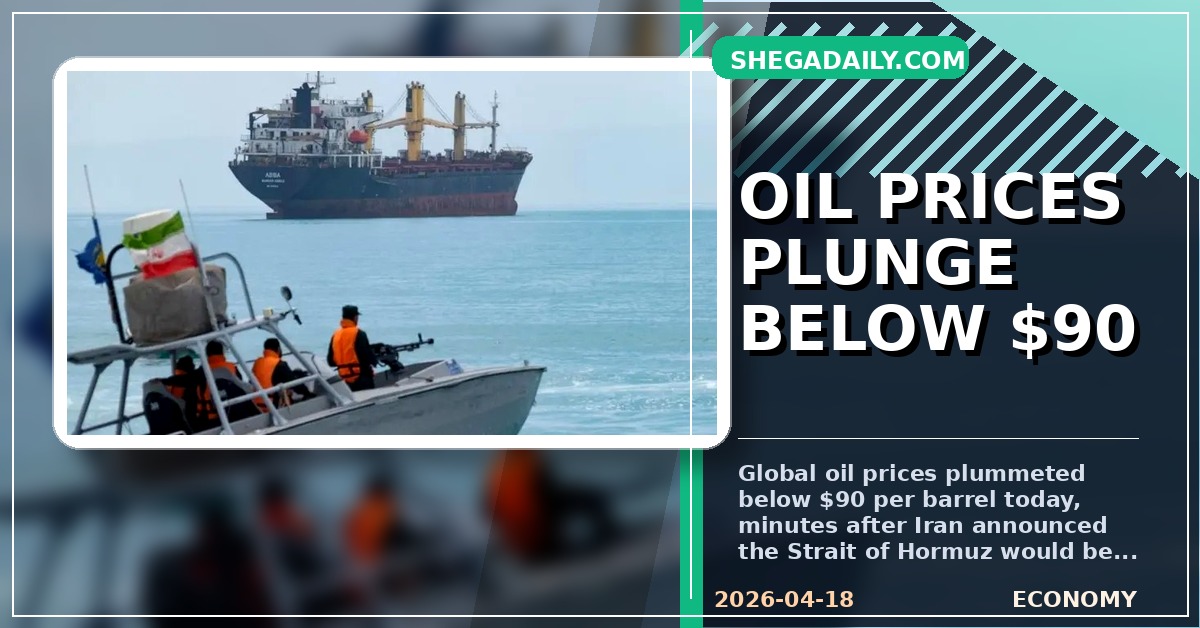
Global oil prices experienced a dramatic fall today, plummeting below $90 per barrel, mere minutes after Iran declared the Strait of Hormuz fully open to all commercial vessels for the duration of an ongoing ceasefire agreement. The unexpected announcement sent immediate ripples through the international energy markets, signaling a potential de-escalation of tensions in a region critical to global oil supplies.
Brent crude, the international benchmark for oil prices, which had climbed to $98 earlier this Friday morning, saw a sharp decline, settling below the $90 mark following the Iranian declaration. This significant drop marks a notable shift in the volatile global energy market, which has been highly sensitive to geopolitical developments in the Middle East.
The Strait of Hormuz, a narrow waterway strategically located between the Persian Gulf and the Gulf of Oman, is one of the world's most critical chokepoints for oil transit. Approximately one-fifth of the world's total oil consumption, and a substantial portion of its liquefied natural gas, passes through this vital channel daily. Its security and accessibility are paramount to global energy supplies and, consequently, to international oil prices. Any perceived threat to shipping in the strait typically triggers an immediate surge in crude oil costs due to fears of supply disruptions.
Iran's decision to fully open the strait, even if temporarily under the terms of a ceasefire, is being interpreted by market analysts as a significant move towards regional stability. Previous periods of heightened geopolitical risk in the Middle East, particularly those involving the Strait of Hormuz, have historically led to sharp spikes in crude oil prices. The current announcement, by reducing the perceived risk of supply interruptions, has exerted immediate downward pressure on prices.
Despite today's significant drop, current oil price levels remain considerably higher than pre-conflict benchmarks. Before the recent regional conflicts and heightened tensions, crude oil prices were typically hovering around the $70 per barrel mark. This comparison highlights the lasting impact of geopolitical instability on the energy sector and the premium that markets have been factoring in due to ongoing risks.
The swift reaction from oil traders underscores the extreme sensitivity of the market to any news that could affect major supply routes or regional stability. An open and secure Strait of Hormuz is a crucial factor for maintaining predictable global oil flows, and any positive development in this regard is met with a strong market response.
While the immediate impact is a welcome reduction in prices for consumers and industries reliant on oil, the long-term stability of oil prices will depend on the durability of the ceasefire agreement and the broader geopolitical landscape in the Middle East. Energy analysts will be closely watching for further developments regarding regional security and the sustained freedom of navigation through this indispensable waterway. The coming days will reveal whether this announcement signifies a lasting shift towards de-escalation or merely a temporary reprieve in a perpetually volatile market.
Source: Telegram / tikvahethiopia