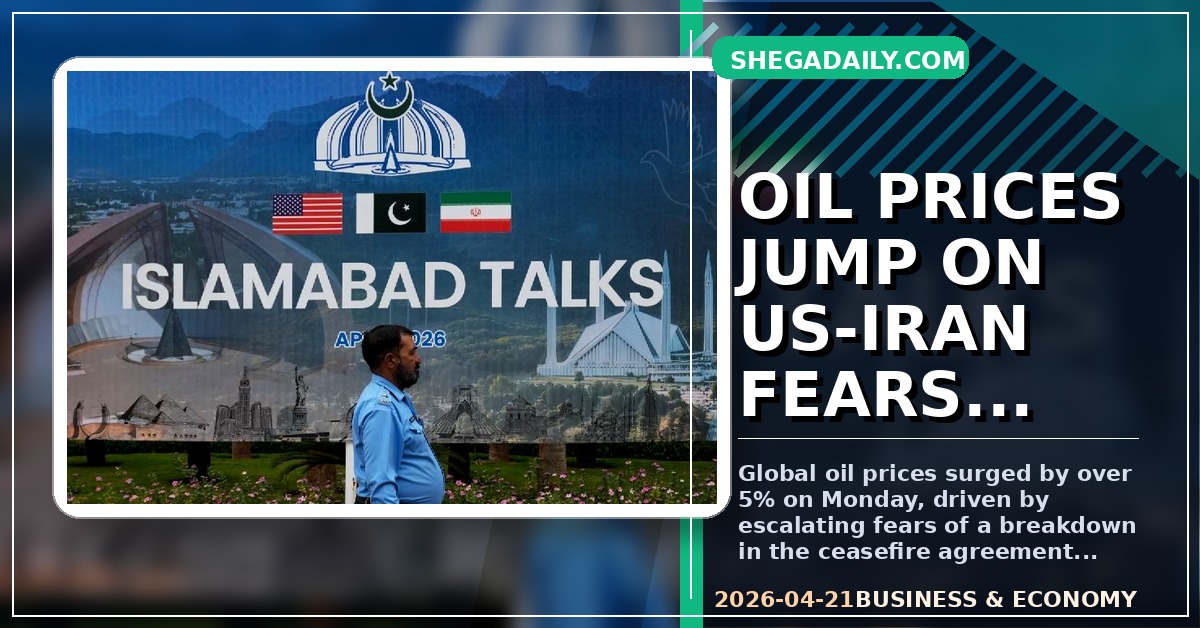
Global oil prices experienced a significant surge of over 5% on Monday, April 20, 2026, following reports that the United States had seized an Iranian commercial vessel overnight. The incident has ignited fears that a fragile 'ceasefire agreement' between Washington and Tehran could collapse, sending ripples of uncertainty through international markets.
Brent crude oil, a key international benchmark, saw its price jump by $4.81, or 5.32%, to reach $95.19 per barrel. This sharp increase underscores the market's sensitivity to geopolitical instability, particularly in the Middle East, a region critical to global energy supplies.
The seizure of the Iranian commercial vessel marks a fresh escalation in the long-standing tensions between the United States and Iran. While details of the vessel and the exact circumstances of its seizure remain sparse, the immediate market reaction highlights the potential for such actions to disrupt global trade routes and energy flows.
Analysts suggest that the fear of a breakdown in any existing understanding or de-escalation efforts between the two nations is the primary driver behind the price hike. A collapse of a 'ceasefire agreement' – which likely refers to a period of reduced hostilities or indirect negotiations – could lead to increased risks of supply disruptions, either through direct conflict, sanctions, or heightened security concerns in vital shipping lanes like the Strait of Hormuz.
Such geopolitical events often trigger a 'risk premium' in oil prices, where traders factor in the potential for future supply shortages or disruptions. This premium can significantly impact consumer prices at the pump and contribute to inflationary pressures globally.
The incident serves as a stark reminder of the volatile nature of international relations and their immediate economic consequences, particularly for energy-dependent economies worldwide. The international community will be closely watching for further developments and any official statements from Washington or Tehran regarding the vessel seizure and the future of their diplomatic engagements.
Source: Telegram / tikvahethiopia