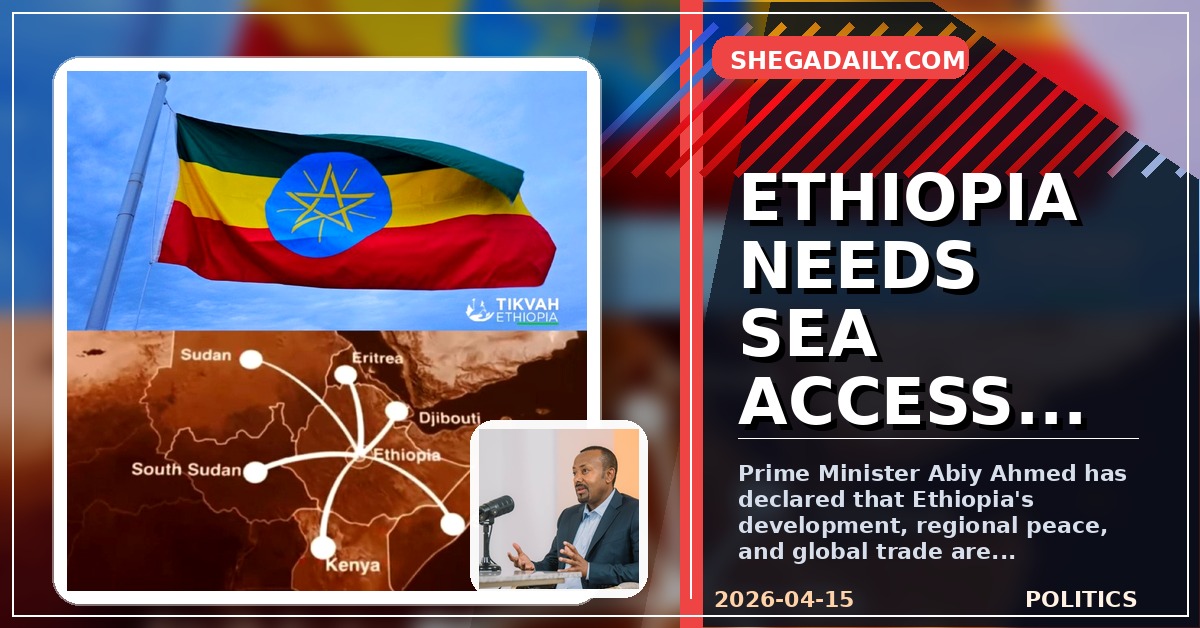
ADDIS ABABA – Ethiopian Prime Minister Abiy Ahmed has issued a stark warning, asserting that Ethiopia's development, regional peace, and even global trade are inextricably linked to the nation securing access to the sea. Speaking on the critical issue of sea access, Dr. Abiy emphasized the profound economic and geopolitical ramifications of Ethiopia's landlocked status.
“Ethiopia will not develop if it does not have sea access. Not only this, but the region will not change; the region will not find peace; and global trade will be disrupted!!” Prime Minister Abiy declared, underscoring the urgency of the matter.
The Prime Minister highlighted the severe economic burden imposed by the lack of direct sea access. He noted that logistics costs for landlocked countries like Ethiopia are significantly higher, ranging from 50% to 100% more compared to neighboring nations with coastal access. “A product imported from China and sold in Nairobi will incur at least a 30% price increase when it reaches the Ethiopian market, solely due to logistics costs,” he explained. These additional expenses, encompassing purchasing and transportation, are ultimately passed on to consumers, leading to substantial price disparities between markets like Kenya and Ethiopia.
Beyond cost, Dr. Abiy pointed to the detrimental impact on logistics efficiency and product quality. Delays in transit, often beyond the control of producers, can lead to contract cancellations and the spoilage of goods, particularly perishable food items. “If a product is delayed on the road, its quality deteriorates, especially when it comes to food,” he stated, illustrating the tangible losses incurred.
He stressed that the absence of sea access, ports, and the resulting logistical limitations will continue to be a major impediment to Ethiopia's prosperity in both the short and long term, affecting current and future generations. The Prime Minister expressed his bewilderment at citizens who debate the necessity of sea access, arguing that it is not merely a governmental or national issue but one that impacts the daily lives of every individual Ethiopian.
To illustrate, he used a simple example: “If a piece of clothing, manufactured abroad, costs 50 Birr with easy transport, it will cost us 70 Birr because we lack sea access.” This price inflation, he noted, extends to all essential goods, from soft drinks to medicines, directly affecting the purchasing power and well-being of every citizen.
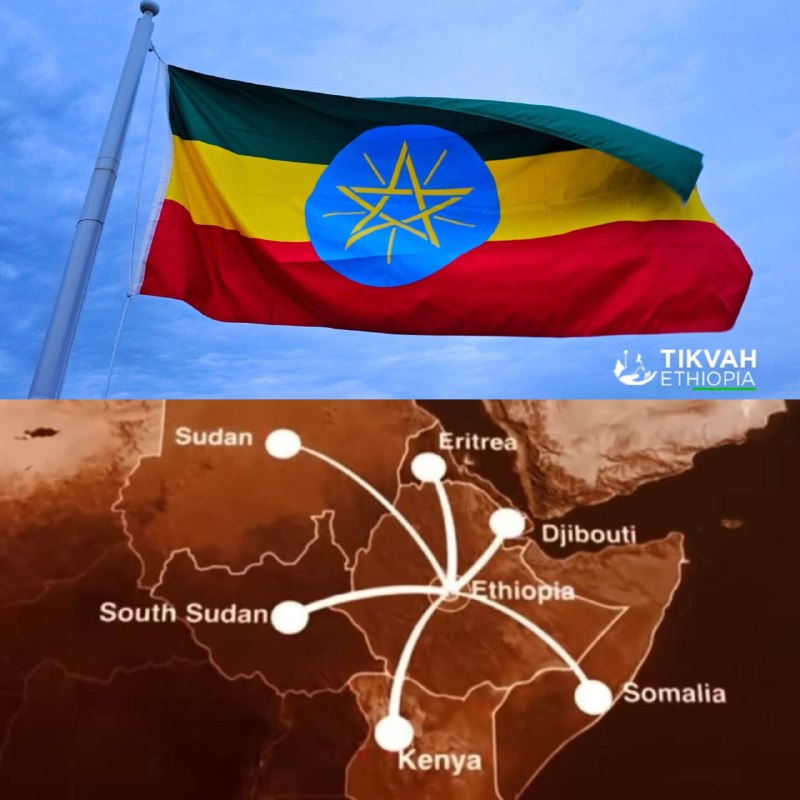
Dr. Abiy also touched upon Ethiopia's historical context, reminding that a nation with the world's 10th largest population, which historically enjoyed sea access, should be able to regain it through dialogue, trade law, and the principle of give-and-take. Ethiopia became landlocked in 1993 following Eritrea's independence. He criticized the notion of keeping Ethiopia landlocked due to malice, lack of communication, or an unwillingness to coexist, especially given the vast 5,000-kilometer coastline from Massawa to the tip of Mogadishu, rich in resources.
He further argued that denying Ethiopia sea access is not only detrimental to Ethiopia but also to the broader region. He questioned why the opening of the Strait of Hormuz becomes a global agenda, yet the potential closure of the Red Sea is not given similar international attention, despite East Africa being the most vulnerable region. Unlike North African nations with Mediterranean access or West and South African countries, East Africa faces unique challenges related to the Red Sea and Gulf of Aden.
“We are a country directly affected by attacks in the Red Sea and Gulf of Aden,” Dr. Abiy stated, emphasizing that the threat is exacerbated by both distant and proximate regional instability. He lamented the inability to agree on measures to protect national interests and defend against these threats.
In the short term, Ethiopia is actively working on improving its logistics infrastructure, including developing trade zones in Djibouti and Modjo, constructing dry ports in Dire Dawa and Modjo, establishing free trade zones, and enhancing railway and highway networks. These efforts aim to streamline imports and reduce costs.
However, the Prime Minister reiterated his long-term conviction: “In the long term, if Ethiopia does not gain sea access, it will not develop. Not only this, but the region will not change; the region will not find peace; and global trade will be disrupted.” He concluded by asserting that anchor countries like Ethiopia are crucial for controlling vital trade routes, and their marginalization could lead to instability and danger for smaller nations and the global economy.

Source: Telegram / tikvahethiopia