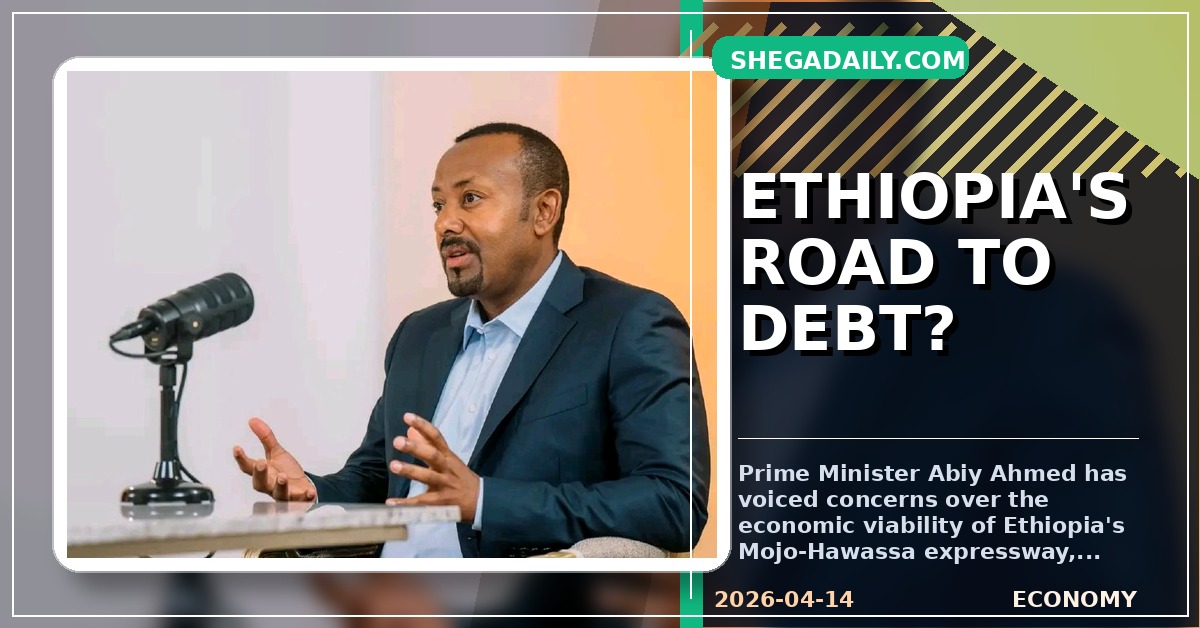
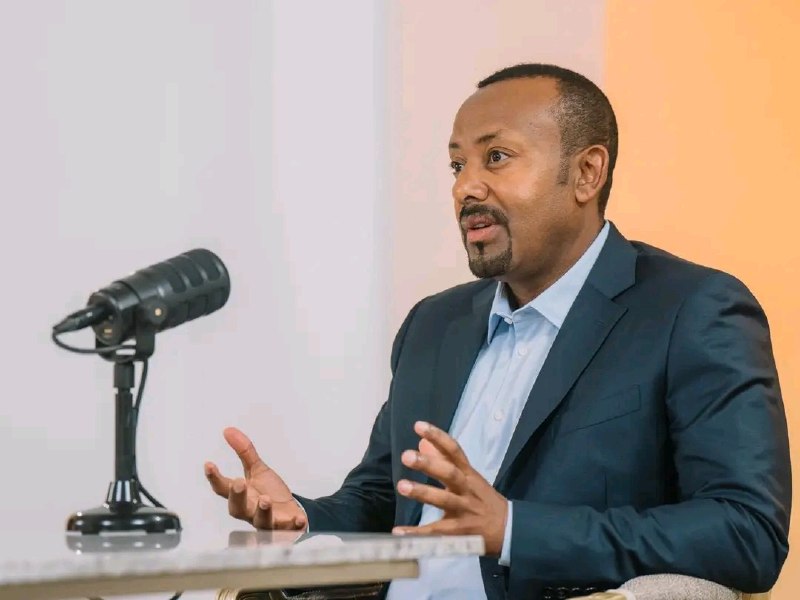
Addis Ababa, Ethiopia – Prime Minister Abiy Ahmed has openly questioned the economic rationale behind the ongoing construction of the Mojo-Hawassa toll expressway, highlighting its substantial cost, loan-based financing, and what he perceives as a poor return on investment for the nation. Speaking not as a government official but "as an individual," the Prime Minister suggested that strategic infrastructure choices have led to significant national debt and macroeconomic imbalances.
The Mojo-Hawassa expressway, a critical component of Ethiopia's efforts to modernize its road network, is currently under construction and remains unfinished. The project, spanning over 200 kilometers, has already incurred costs exceeding $700 million, financed primarily through loans. Prime Minister Abiy expressed skepticism about the project's ability to repay its debt within the next 30 to 40 years, given its current trajectory.
While acknowledging the undeniable need for improved road infrastructure across the country, including vital links from Mojo to Hawassa, Hawassa to Moyale, Hawassa to Sodo, and Hawassa to Arba Minch, Dr. Abiy emphasized the importance of strategic prioritization. "We don't have enough roads, there's no question about that," he stated, underscoring the broader development challenge.
However, his critique centered on the specific choice of the Mojo-Hawassa route over other potentially more impactful corridors. The Prime Minister posited an alternative scenario: "If the highway we built from Mojo-Hawassa had instead been constructed from Adama to Awash, and if the road we are now building from Adama to Awash had been extended from Awash to Mieso, connecting to Dire Dawa and then to Djibouti, imagine what that would mean for Ethiopia's economy."
Ethiopia, a landlocked nation, relies heavily on the Port of Djibouti for the vast majority of its international trade. The Adama-Awash-Mieso-Dire Dawa-Djibouti corridor represents the country's primary economic artery, facilitating the flow of goods to and from global markets. Investing in this critical trade route, according to Dr. Abiy, would have yielded far greater economic dividends.
"The $700 million loan for the Mojo-Hawassa highway cannot be repaid in the next 30 to 40 years," he reiterated. "If it had been towards Djibouti, it would undoubtedly impact our economy, directly and indirectly, in visible and invisible ways. If we had invested there, and after generating revenue, then invested in Hawassa or other places, there would be no problem."
The Prime Minister clarified that his concern was not with the act of building infrastructure itself, but rather with the financing mechanism and the selection of projects with suboptimal economic returns. "The problem is not the work itself, but that the work is done with loans, and the chosen locations have a very poor Return on Investment (ROI)," he explained. This approach, he warned, has led to Ethiopia accumulating substantial debt and contributing to macroeconomic imbalances.
Dr. Abiy's remarks underscore a broader debate within Ethiopia regarding sustainable development, debt management, and the strategic allocation of resources for national growth. As the country continues its ambitious infrastructure development agenda, the balance between immediate regional needs and long-term national economic impact remains a critical consideration for policymakers.
Source: Telegram / tikvahethiopia